
S Corp Requirements AlternativeS corp requirementsWhat an S corp actually requires.
You already have the company. What you get here is current books, a real wage, and the March return, kept as a plan for the year. Steven Palmieri, a Tax CFO, holds the election, the wage, and the closed months with you.

Which requirement are you unsure of.

You will be talking to the Steven Palmieri practice.

Who may own it.
People, a cap on the count, and one class of stock.
Click to see the owners ›Tap to see the owners ›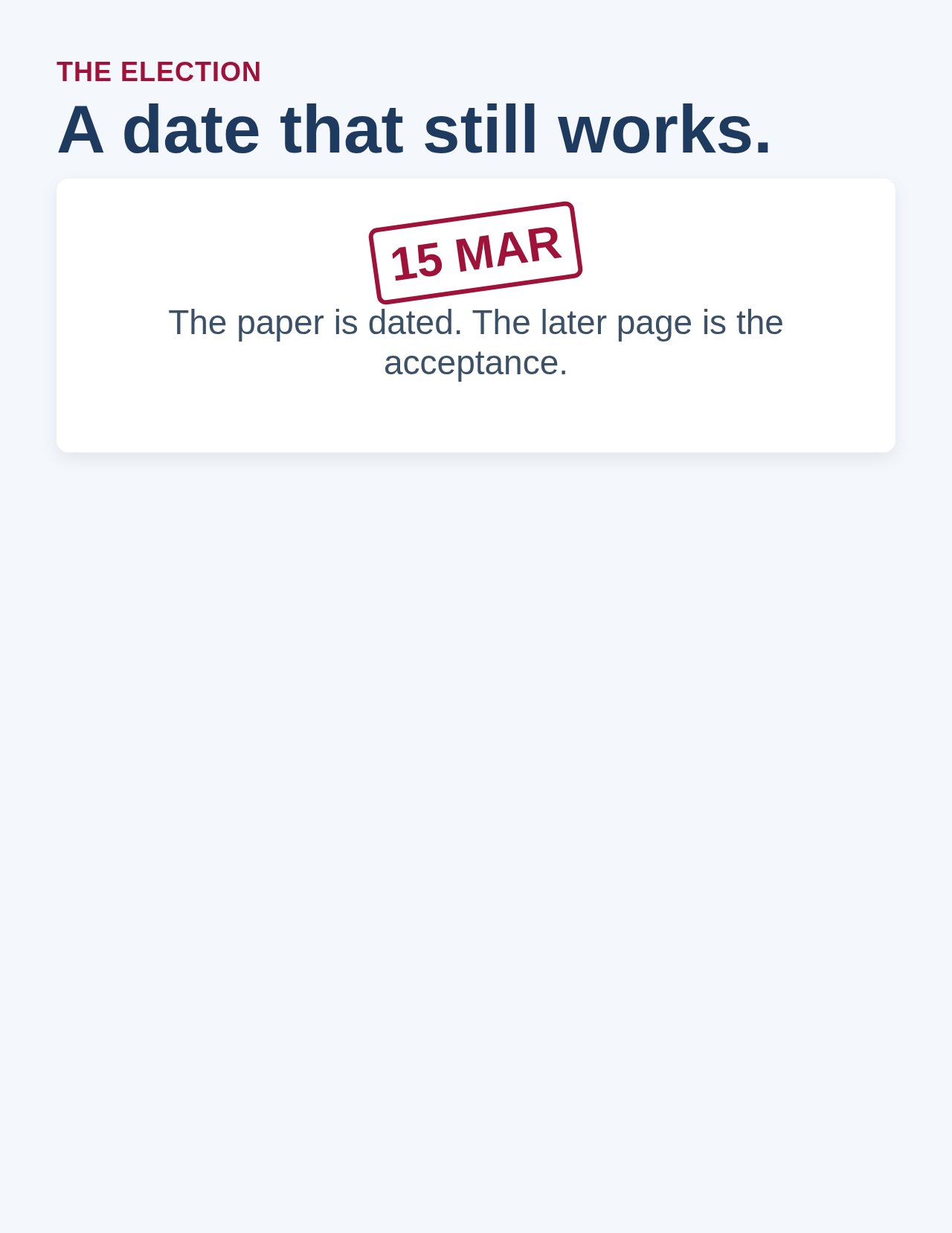
The election on file.
Form 2553, signed, with a date that still works.
Click to see the election ›Tap to see the election ›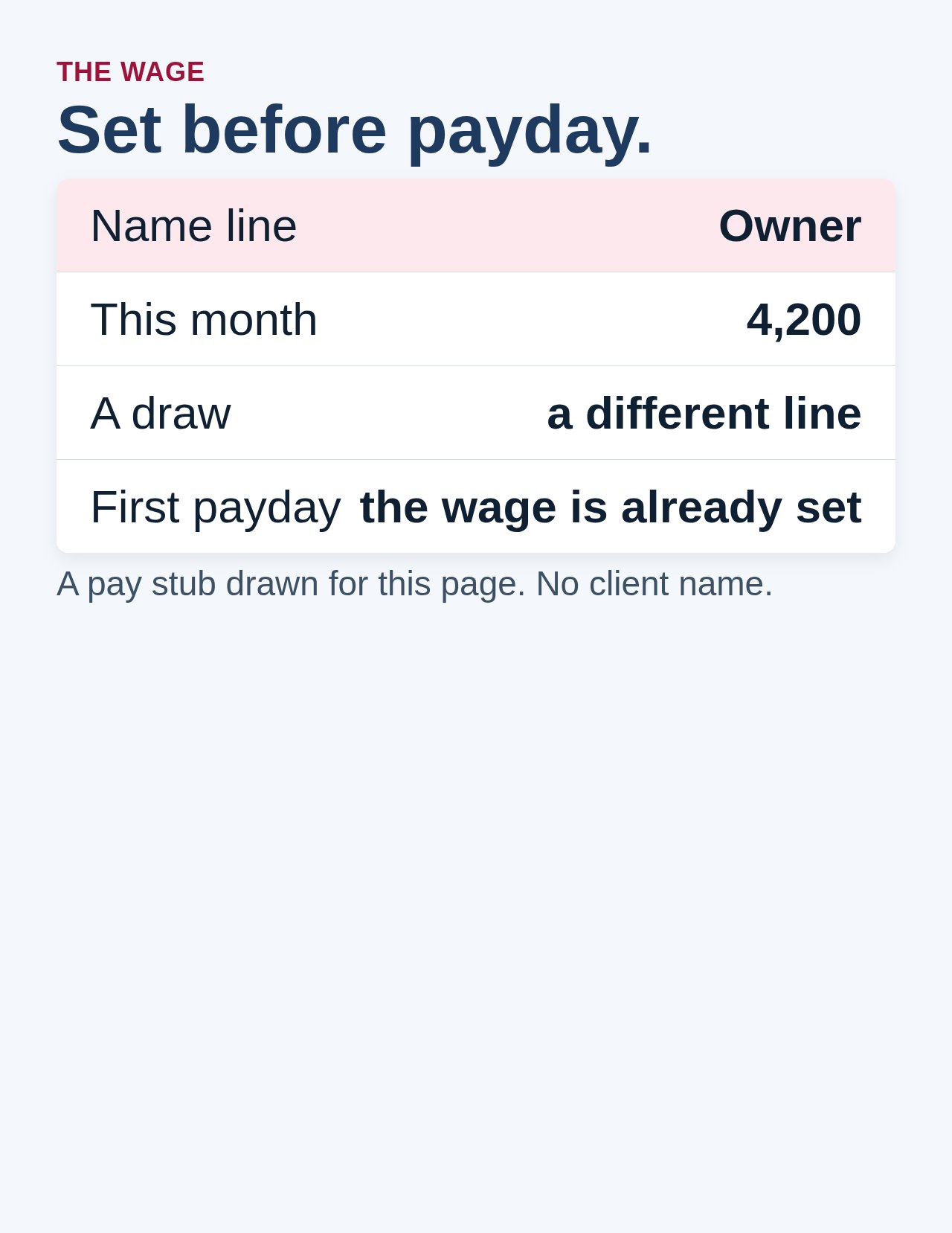
The owner wage.
The owner's paycheck, set before the first payday of the year.
Click to see the wage ›Tap to see the wage ›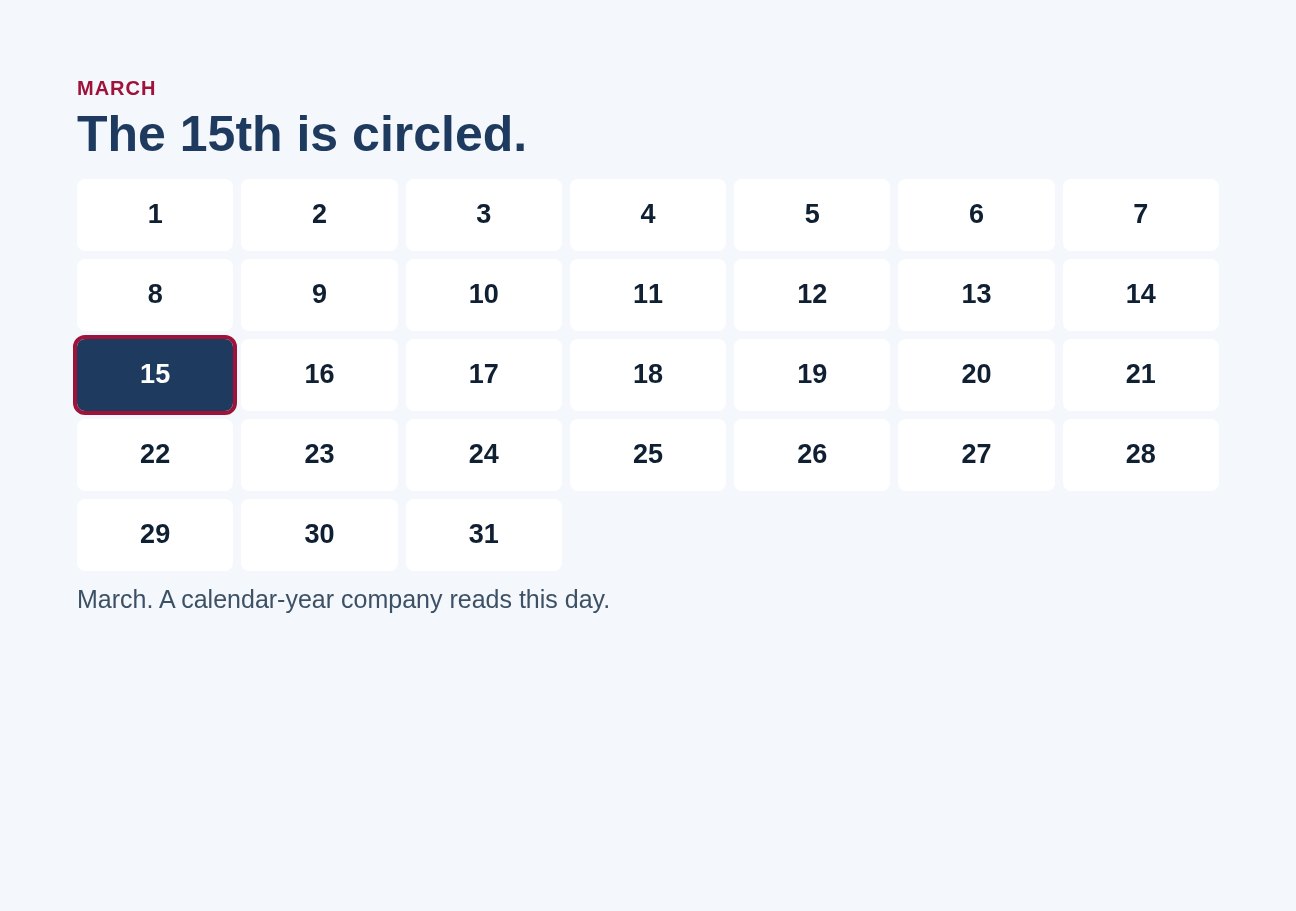
The March return.
For a calendar-year company, 15 March is the day.
Click to see March ›Tap to see March ›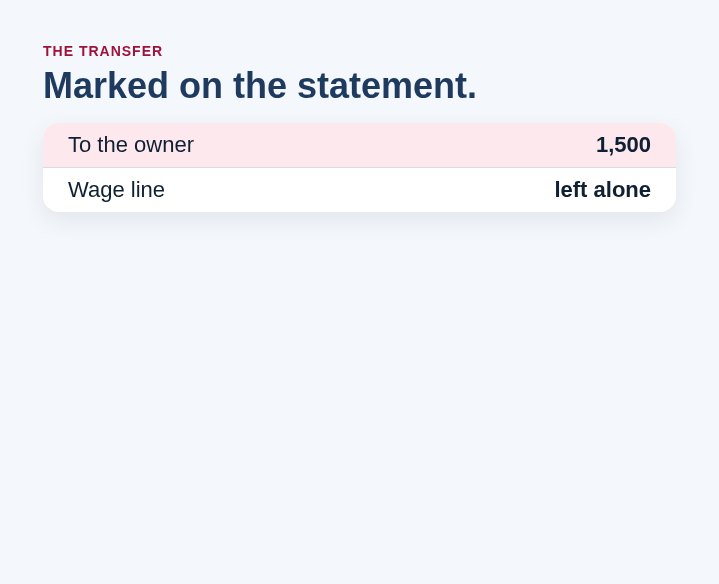
Distributions and basis.
The draw and the wage stay on two lines, and basis limits the loss.
Click to see the draw ›Tap to see the draw ›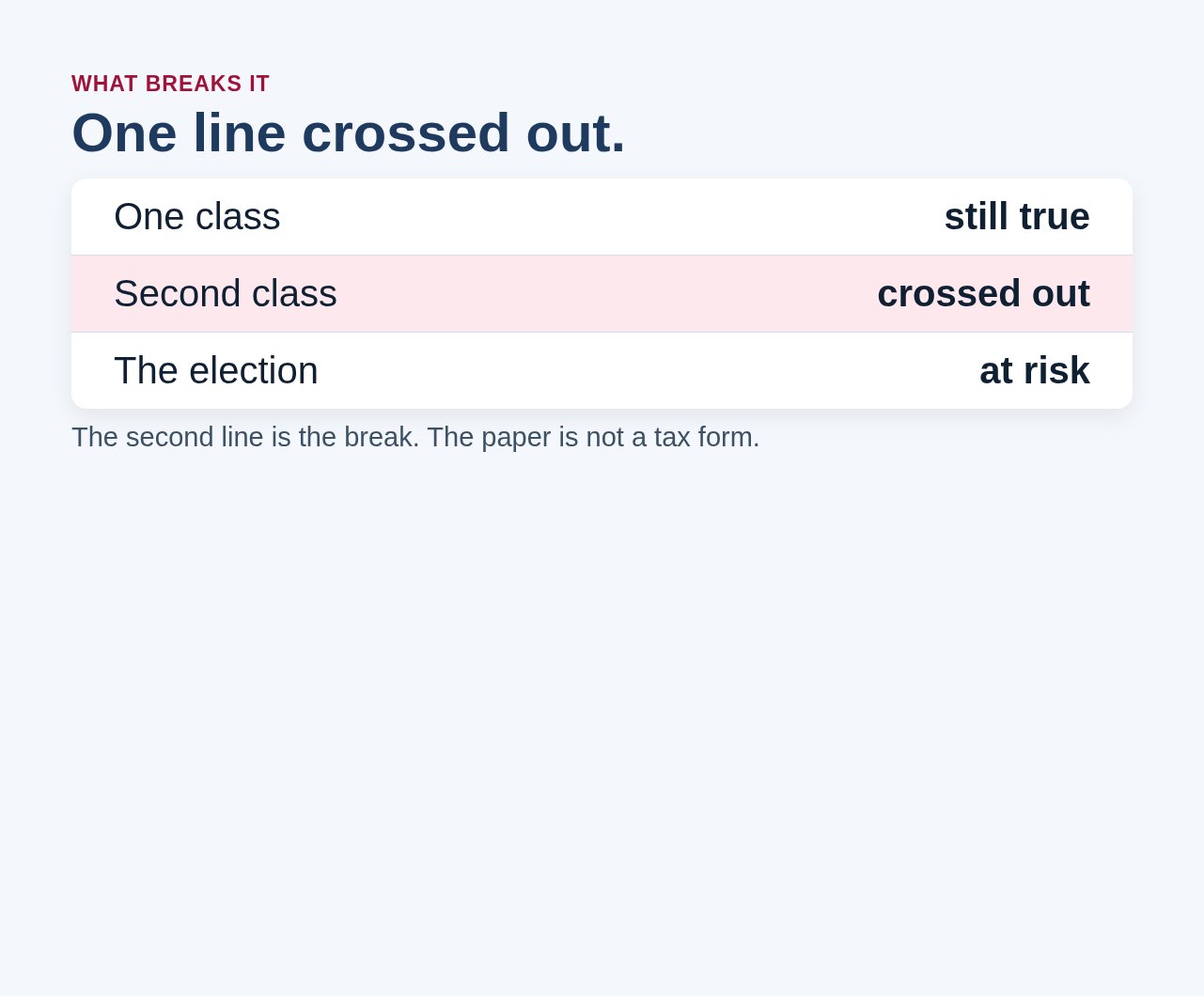
What breaks the election.
An owner who cannot hold the stock, or a second class.
Click to see the break ›Tap to see the break ›
Six papers an S corp owner holds.
Pick the paper that matches the folder. The note says what we keep true.
1Acceptance letter
Acceptance letter
The election was received and a date was written on it.
We keep that letter with the company file and we read the date before the year moves.
2Form 2553 copy
Form 2553 copy
The election itself, with the shareholders who signed it.
We match the names on that copy to the people who own the company now.
3The W-2
The W-2
The wage the owner who works in the company was paid.
We set that wage before the first payday of the year we are closing.
4The K-1
The K-1
Each owner's share of the closed year.
We build it from months that already match the bank, not from a guess in March.
5The 1120-S notice
The 1120-S notice
The company return, and the day it has to leave.
For a calendar-year company that day is 15 March, and the closed months have to be done first.
6The state report
The state report
The state where the company was formed may want its own annual page.
We name that page when the formation state is known, and we do not invent a form for a state we have not read.
Who may hold the stock.
Click to see the owners ›Tap to see the owners ›
The election sits on a company, and the company has to stay the kind of company the election allows. The owners are people, or a short list of trusts and estates the statute already names. A partnership does not sit on the cap table. Another corporation does not sit there either. When a new owner arrives, we read that owner against the list before the shares move.
The published cap is 100 shareholders. A family can elect to count as one for that cap, and we do not treat that election as automatic. We write the count in the month the shares change, with the names beside it. A transfer that pushes the company over the cap is a transfer we stop and name, before anyone calls it a small paperwork item.
One class of stock is the other gate. Voting rights can differ and the company can still have one class. What cannot differ is the right to distributions and the right to what is left if the company ends. A side letter that pays one owner more, or earlier, is the letter we read before we say the class is still one.
The election has a day on it.
Click to see the election ›Tap to see the election ›
Form 2553 is the election. It is signed by the people who have to sign it, and it names the year the company wants the election to start. For a company that keeps the calendar year and wants the election to cover the year already underway, the form is due on the 15th day of the third month. That day is 15 March. A company can also file the form in the year before, and then the election waits for 1 January.
A late form is not the same as a missing form. Relief for a late election has its own path, and we do not promise that path until we have read why the form was late and who has reported in a way that matches the election. The copy we keep is the copy that shows the signatures and the year. A recollection that someone filed it is not the copy.
Once the acceptance letter arrives, we put it in the same folder as the signed form. The letter has a date. We read that date when a buyer, a bank, or a new shareholder asks whether the election is real. The folder holds the letter. An email that only remembers the filing does not replace that letter.
The wage is set before payday.
Click to see the wage ›Tap to see the wage ›
An owner who works in the company is an employee for the wage, and a shareholder for the rest. The wage is the pay for the work. It runs through a payroll the company already has, and this practice steps out before the paycheck is sent. Staff payday remains on the payroll company the business already uses. Before the first payday of the year we still write what the wage is going to be and why that figure matches the work.
Reasonable pay is a wage for the work, and we do not invent a percentage. A stranger doing the same work, in the same company, with the same duties, is the comparison. We write the duties down. We write the wage beside them. We look at what the company can pay without emptying the account that also has to cover the vendors. A year with no wage, and a large draw, is the year we will not sign off as ordinary.
The W-2 is the paper that shows the wage happened. It is one of the six papers on this site. Distributions can still happen, and they are a different line. Mixing the two in one transfer, with no payroll entry, is how a clean election starts to look like a draw that was never a wage. The wage and the draw are labeled in the month the bank shows the transfer.
March reads a year that is already closed.
Click to see March ›Tap to see March ›
The company return for a calendar-year S corp is due on 15 March. That is the 15th day of the third month, which is the rule, not a preference. A company that keeps a fiscal year files on the 15th day of its own third month, and we do not treat 15 March as that company's day. The K-1 for each owner leaves with that return. If the months from January through December are not closed to the bank, the return is a draft and we say so. We do not invent a profit so the form can leave on time.
Closing a month means the bank, the payroll, and the owner draws all agree. Open months stay open. They are named, and the return waits, or the work stops, before a number is typed onto the company return. An extension moves the filing day. It does not close the months. We do not treat the extension as a substitute for the close.
Each K-1 is that owner's share of the closed year. Basis is the running tally of what that owner has in the company, and it limits the loss the owner can take. We keep the tally with the months, not in a spreadsheet that appears in March. An owner who takes a draw larger than basis has a fact we write down in the month of the draw, while there is still time to talk about it.
The wage and the draw are two lines.
Click to see the draw ›Tap to see the draw ›
After the wage, money can still move to the owner. That movement is a distribution. It is not pay for the week. It does not replace the W-2. It reduces basis when basis is there to reduce. We label the transfer in the month it clears the bank, with the word distribution on it, so March does not have to guess which transfers were pay and which were a draw.
Two owners who hold the same class take distributions in proportion to their shares. A transfer that favors one of them, and is not a wage and not a loan with real terms, is the transfer that can create a second class. The month the uneven transfer clears is the month we write it down, so March is not the first time you hear it. A loan to an owner is a loan only when it has terms and it is paid like a loan. Calling a draw a loan in March does not make it one.
The basis tally also picks up the owner's share of the profit and of the loss, and the money the owner put in. The tally is rewritten in the month the bank is tied out. A K-1 that shows a loss the basis cannot absorb is a K-1 we will not pretend is fully usable. The limit is part of the requirement, and it is a number we can see before 15 March if the months were closed on time.
What makes the election fail.
Click to see the break ›Tap to see the break ›
The election ends when the company stops meeting the list. An owner the statute does not allow, a second class of stock, or a count over the cap will do it. Some endings are chosen on purpose, with a revocation. A revocation has its own timing, and we do not file one as a mood. We write what changes, who has to consent, and which year the end applies to.
A failure we did not choose is the one that hurts. It can turn a year the owners thought was an S year into a different kind of year, with a different return. That is why we read the owner list, the side letters, and the wage every month. The new shareholder, the side letter, and the missing wage are all visible in the month they happen. March is late for all three.
We do not claim every late election is saved, and we do not claim every broken election can be repaired. We read the fact, we name the paper, and we say whether the work on this site can still keep the list or whether the company needs a different kind of help. The first conversation says which of those it is, before anyone signs a scope.
What this page will not pretend.
Click to see the limit ›Tap to see the limit ›
Nothing here is a ruling for your own company. Shareholder rules, the late-election paths, and the wage that is reasonable all turn on facts we have not seen until you bring them. The pages name the list a calendar-year company has to keep. They do not measure your cap table, your payroll, or your basis.
On the first call Steven Palmieri sits in the Tax CFO role and holds the file against the four requirements. The practice prepares returns and keeps the months, inside the limits written on the disclosures page. A signed cover that tells an outsider the figures were examined is not a cover we write. When a bank wants that cover, we name the handoff before the work starts.
The phone on this site reaches the same person who reads the list. There is no second office and no street on these pages. A note on the form names the requirement you are unsure of. The paid work starts later, when a signed page names the scope and the price.