S Corp Requirements AlternativeDistributions and basis.
Money moved to you and nobody wrote down whether it was pay or a draw.
See the draw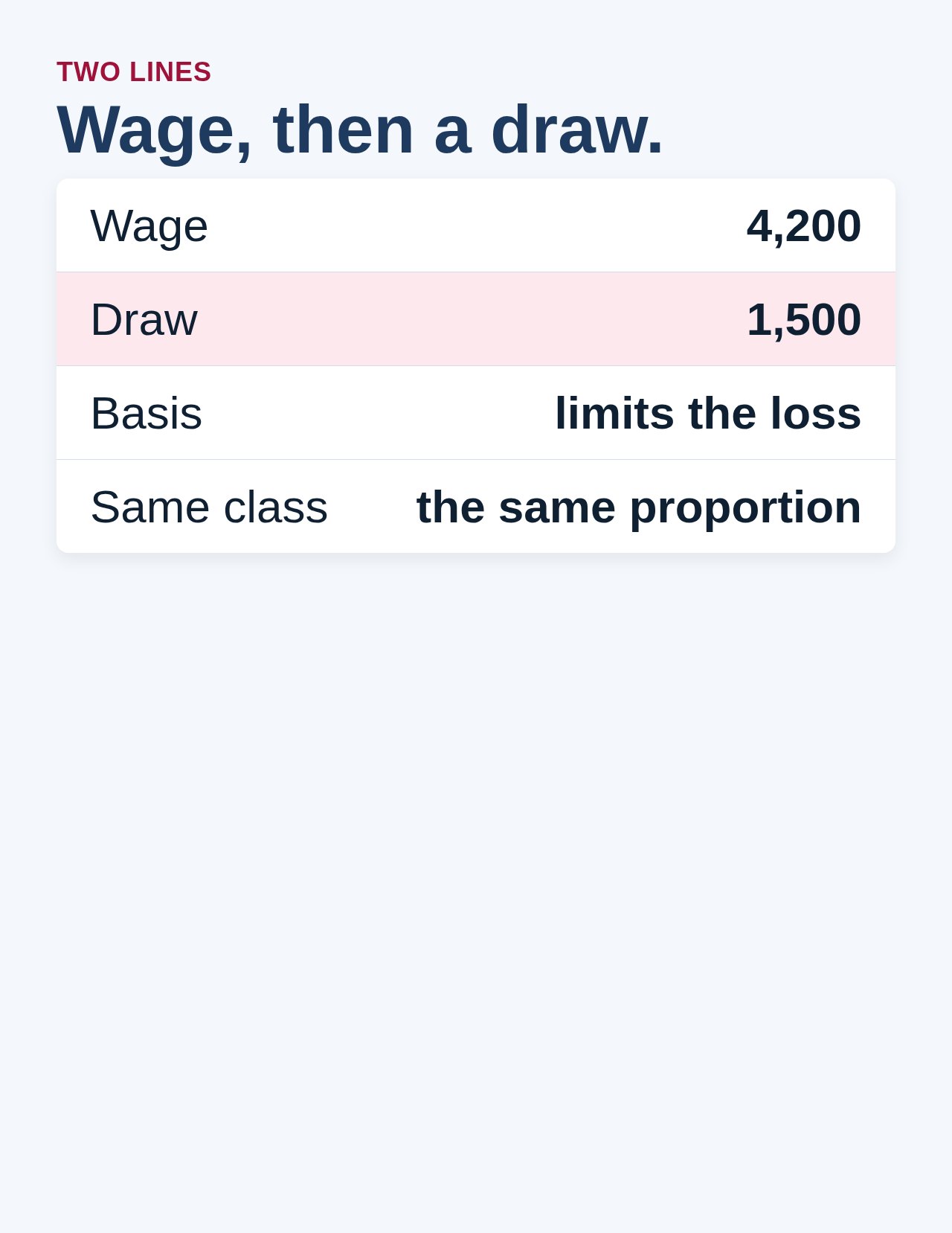
Two lines that are easy to merge.
Click to see two lines ›Tap to see two lines ›
A transfer hit your account and you do not know whether it was pay or a draw. A wage is pay for work. A distribution is a transfer of company money to an owner because the owner holds stock. A paycheck and a draw can clear in one month and still be two entries. The wage runs through payroll. The distribution is labeled as a distribution and it is measured against basis. When a bank feed shows one transfer, we still ask which of the two it was. The answer changes the W-2, the basis tally, and the K-1.
Owners often use one drawing account for both. That habit is how March becomes a sorting exercise. We would rather label the transfer when it clears. If the year behind you was not labeled, the first work is the sort, month by month, and we will say if that sort is too large for the filing date you have in mind.
Basis is a tally we update every month.
Click to see basis ›Tap to see basis ›
Basis starts with the money and the property the owner put into the company. It rises with the owner's share of income. It falls with the owner's share of loss and with distributions. The order of those steps matters, and the published ordering rules are the ones we follow rather than a custom sequence. We update the tally when the month closes so a draw in July is tested in July.
A loss the basis cannot absorb does not disappear, and it also does not automatically reduce this year's tax. It waits. A distribution larger than basis is not a tax-free transfer just because someone hoped it would be. Those are the two surprises this page is about. Both are visible early if the tally exists. Both are ugly if the tally is built for the first time a week before the return is due.
Proportion, loans, and side deals.
Click to see the draw ›Tap to see the draw ›
Owners of the same class take distributions in proportion to their shares. Paying one owner early, or more, can be a second class of stock even when nobody used those words. We compare the transfers to the ownership percentages. A difference that is really a wage belongs on the payroll. A difference that is really a loan needs terms and payments. A difference that is neither is the one we will not leave unlabeled.
Calling a distribution a loan after the fact is a common repair that is not a repair. A loan has a note, an interest fact, and payments. A draw that was spent, with no note and no payments, is a draw. We will not rename it in the workpapers to make the basis tally look calmer. The tally should describe what happened.
What we want from you.
Click to see your note ›Tap to see your note ›
The useful note names the year, says whether a basis tally already exists, and says whether the draws were labeled when they happened. If you have a spreadsheet, we will read it against the bank rather than trust the headings. Headings are easy to change. The bank is not.
Keeping the tally each month is part of keeping the requirements true. Basis lives on the same monthly list as the wage and the election. The same close that makes the March return a reading is the close that makes the basis number a fact. That is the work we are offering to scope, after this note, and not before.
Name the paper you are holding.

You will be talking to the Steven Palmieri practice.